Let's Use Data to Compare Milks
A data-driven comparison of whole milk and its plant milk counterparts

Hey y’all. Hope you’ve been staying safe during the winter storm, wherever you’re reading this.
I’m writing this from Atlanta, and it’s not too bad right now. Been missing the past couple of weeks, so this blog is delayed, but that’s not new. Today’s post is about milk.
Whole milk is an indulgence, and I’m tired of pretending it’s not. Not only am I lactose-intolerant, but also I’m an Environmental Ally™ so I try to do my part and drink plant milks on the regular because of their recorded higher carbon footprint than other milks.
Milk is one of the few foods where substitution feels obvious and incomplete at the same time, so here’s a data roundup of all the
Which data did I use?
This should be no surprise; I am getting the information for the USDA database. Specifically, I am getting the data from the Survey (FNDDS), a database that provides the nutrient values for foods and beverages reported in the National Health and Nutrition Examination Survey.
How does milk differ from its alternatives?
The biggest thing for me is the texture of milk; I like the creaminess, and while I know there are some dubious reasons why that texture is so great (hint hint, there’s blood and pus in the milk), I also know that a big part of is it because of the fat content.
When comparing the treemaps for Whole milk and Almond milk, you can see the difference pretty prominently.
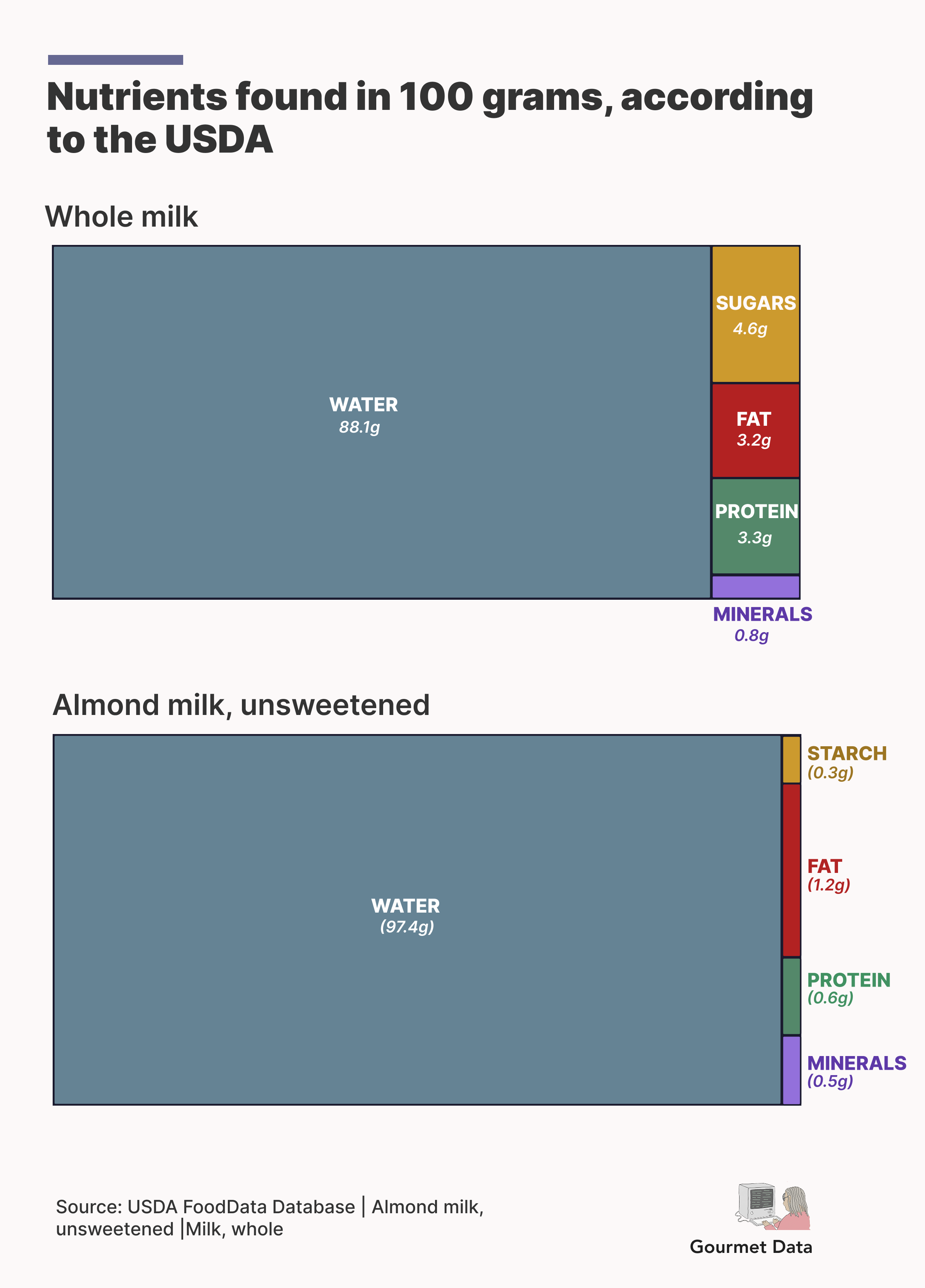
With almond milk, most of it is water. Actually, in fact, there are controversies in its cultivation specifically because its high water usage. So, naturally, it makes sense that almond milk would be mostly based in water.
This extends to soy milk and oat milk as well. Both sit at about 92% water, while whole milk’s is 88%, and almond milk is 97%.
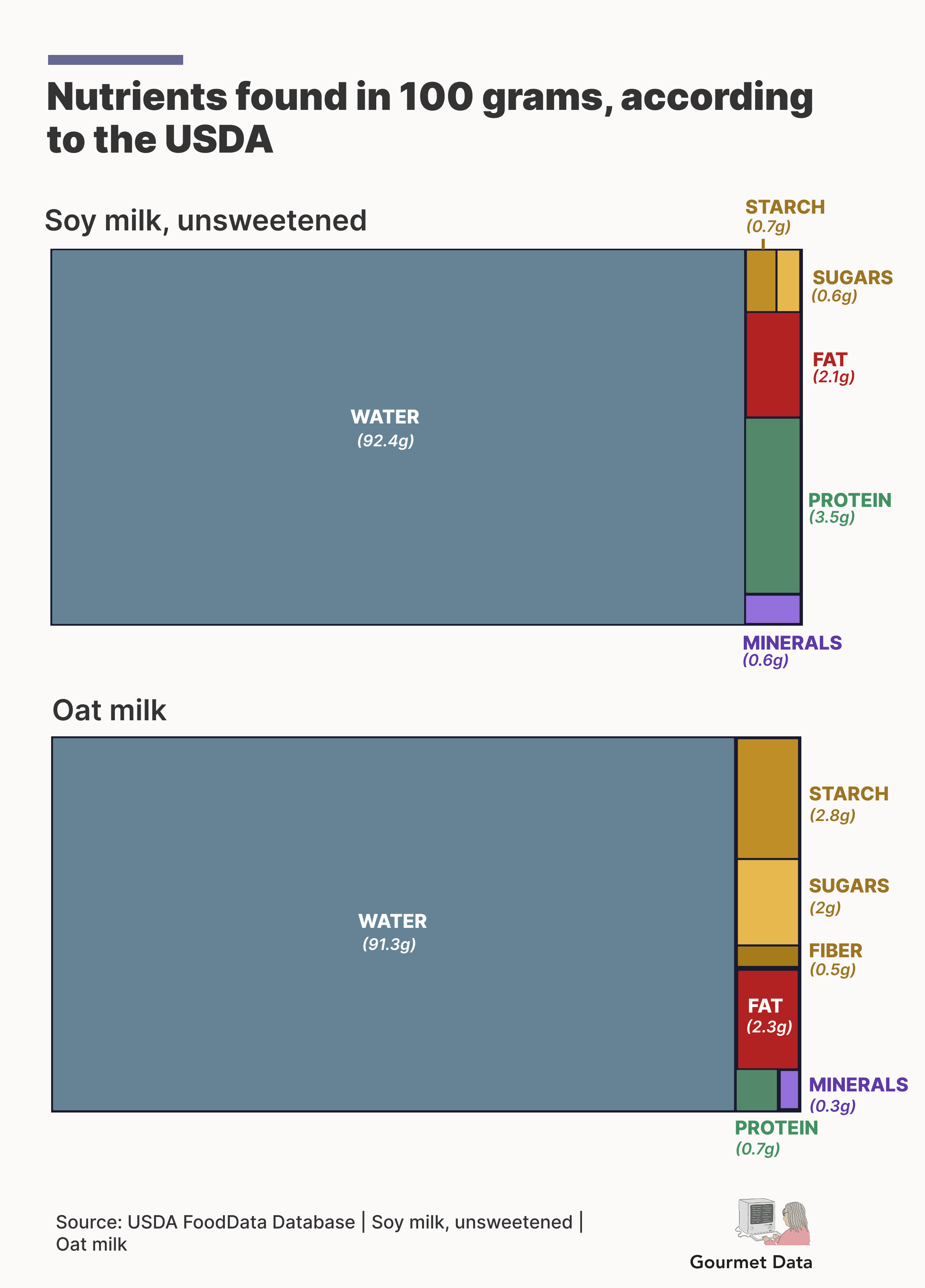
Oat milk, arguably the closest in texture to whole milk, does have the considerably more fat and less protein than soy milk, and one could assume more sugars make it thicker as well.
Which milk is the healthiest for me?
Because I consume so much milk, part of my preference for a type of milk is based on health. Ultimately, all of the milks offer modest benefits, and are good in Vitamin B12 and Calcium. Unsurprisingly, Oat milk and Almond milk are two of the less nutritious milks.
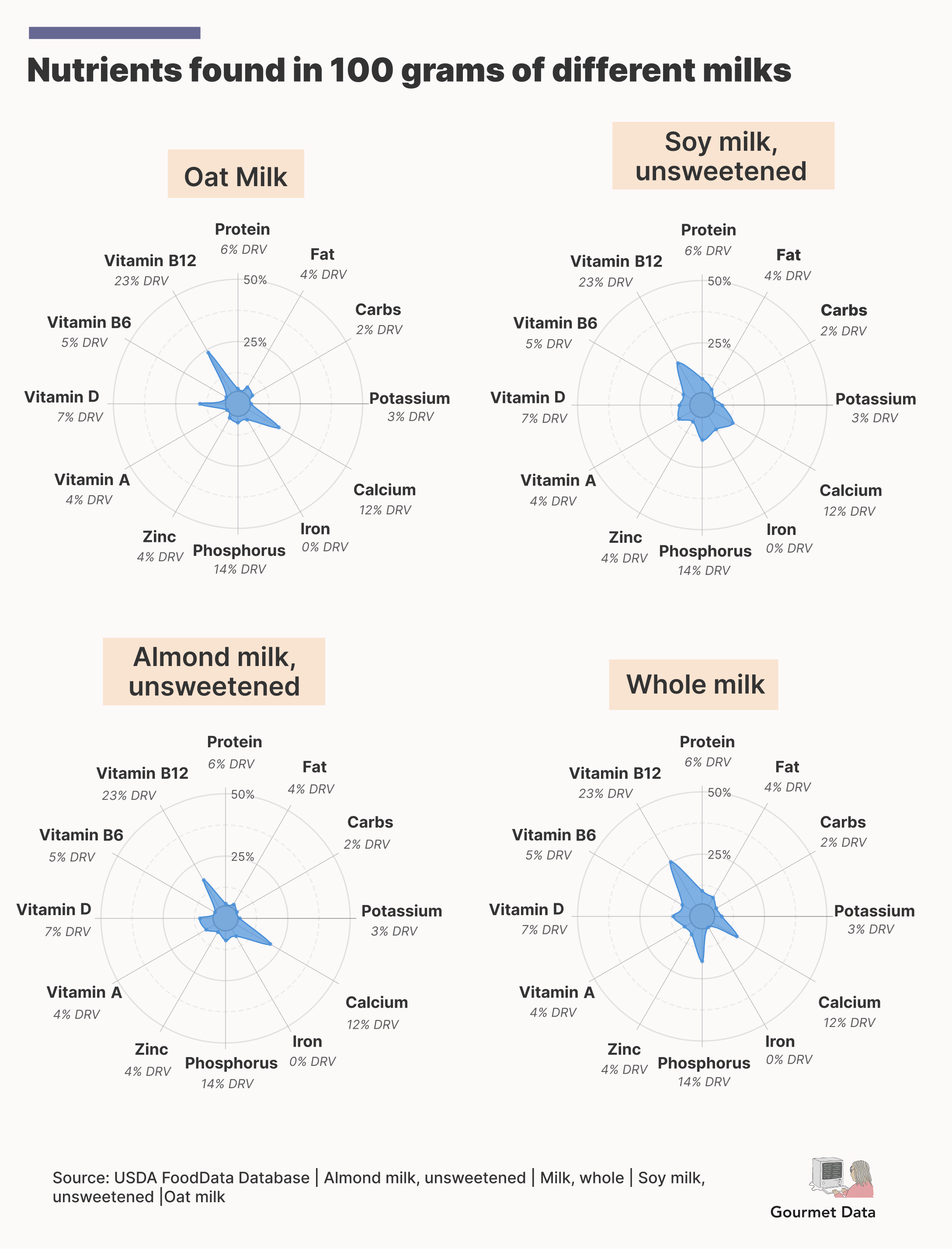
Milks are better than each other in specific contexts
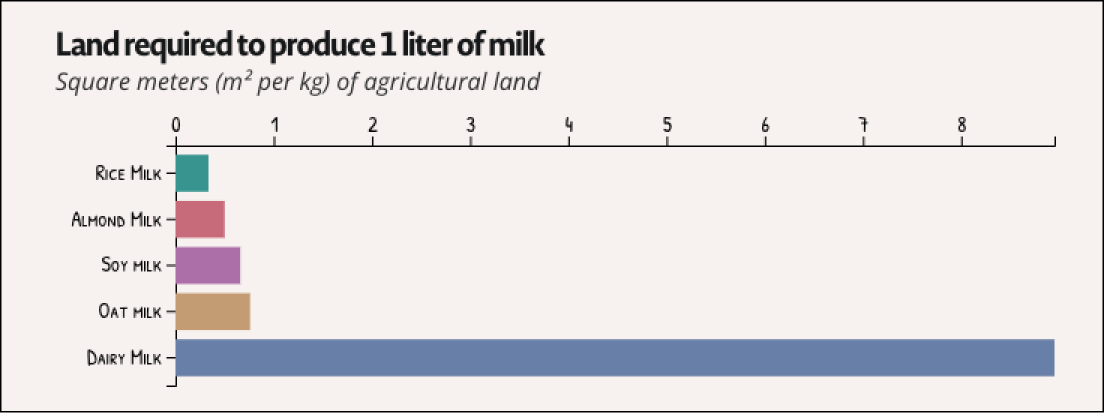
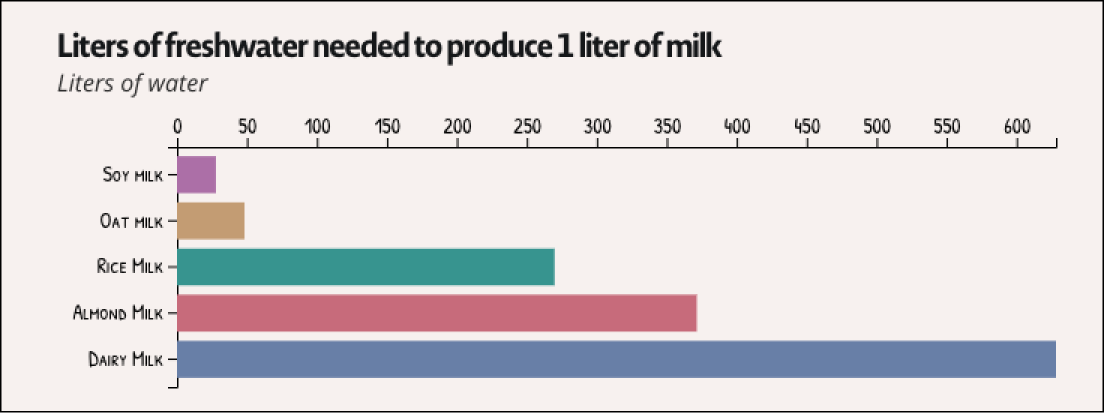
At the end of the day, milk isn’t good nor is it necessarily bad. Different milks have different purposes, so it really is a matter of preference. There are a couple of stats on how much resources different milks use listed below, and I actually already wrote a piece about this, with an interactive tool that offers more nuanced comparison. I recommended reading that until I have the time to write the version 2 of this piece.